


01/12/2025
Professor Dr. Ali Koşar is currently a faculty member in the Mechatronics Program at Sabancı University's Faculty of Engineering and Natural Sciences. He also serves as a distinguished research professor at SUNUM, the Sabancı University Nanotechnology and Application Center, and as the co-director of EFSUN, the Center of Excellence for Functional Surfaces and Interfaces for Nano Diagnostics.
He explains why he chose to return to Türkiye in 2007, despite having a job available in the US: "I wanted to be useful."

A Different Profile
Dr. Koşar has a different profile from the scientists I've met before. First of all, he's incredibly hardworking. It's amazing how he manages to conduct so many studies and projects simultaneously. He also consistently welcomes requests for seminars and conferences from both domestic and international public and private companies. He has published over 200 articles in the most prestigious journals in his field and has been cited over 10,000 times. He has over 100 peer-reviewed international conference proceedings.
In addition to teaching, he works with his team on dozens of projects at both SUNUM and EFSUN.
When I ask him how he manages to fit such a busy work schedule into 24 hours, he says, "I don't sacrifice sleep anymore. I sleep 6-7 hours a night for my health." However, when I ask him if he spares time for other activities outside of his family, laboratory and office, he answers, "I don't feel the need," indicating that he dedicates every moment of his life to science.
The Driving Force of Science: Imagination
In a 1929 interview, Einstein emphasized the importance of imagination, saying, "Imagination is more important than knowledge. For knowledge is limited to all we now know and understand, while imagination embraces the entire world, and all there ever will be to know and understand." Indeed, when we look at those renowned scientists who made ground-breaking discoveries, and whose names were written in the history of science, we see that they pursued the extraordinary ideas their imaginations presented them.
Prof. Dr. Ali Koşar, who holds a respected position on a national and international scale for his successful work in the design and development of microfluidic devices, is a scientist who has combined imagination and scientific methodology with great mastery, passion, and genius, and has achieved groundbreaking discoveries.
I asked Dr. Koşar, who has extraordinary dreams for the future, which of his current projects excites him the most: “We are working on a next-generation bio-coating project, archaea* bio-coatings that will be used as surfaces in thermal-fluid systems. These systems are currently metallic. I dream of transforming them into bio-channels/surfaces. The key is that the materials are obtained from nature, like archaea. It's possible to produce them through culture. Systems designed using archaea are more economical, more sustainable, and more environmentally friendly.”
*Archaea are single-celled prokaryotes. Their most important characteristic is their ability to survive in both normal and extreme conditions. For example, they can survive temperatures exceeding 100°C, in the depths of the ocean, in freezing temperatures, and in acidic, alkaline, and hypersaline environments.
Research Interests
As a leading global researcher in next-generation microfluidic systems and micro heat sinks, Dr. Koşar's research interests span a wide spectrum, encompassing micro/nanoscale heat and fluid flow, condensation, boiling, heat transfer, microfluidic systems, and cavitation.
He currently collaborates with a diverse research group comprised of researchers, graduate students, and engineers from various disciplines. He increasingly collaborates across disciplines (energy, nanotechnology, applied physics, bioengineering, biochemistry, and mechanical engineering) to provide an interdisciplinary approach to energy and healthcare applications.
Micro/nanofluidic devices and systems have a variety of functions that could replace biomedical analysis and diagnostics. Rapid diagnostics with small amounts of sample in a short time, combined with cost advantages, could become life-saving technologies in emergency situations in mountain villages with transportation constraints. Ultimately, next-generation diagnostic platforms appear poised to open the door to a new era of futuristic technology.
Dr. Koşar is conducting intensive research on the applications of micro-scale hydrodynamic cavitation in biomedical therapies. The goal is the design, development, and production of next-generation biomedical devices. As micro-scale hydrodynamic cavitation doesn't generate excessive heat, has fewer side effects, is less expensive, and is energy-efficient, it's a potential alternative to ultrasonic methods in cancer treatments and other medical applications such as kidney stone removal and prostate treatment.
Many of the studies conducted at SUNUM and EFSUN have potential benefits in everyday life, such as enhancing the quality of graphene, improving nanomaterials, developing anti-icing materials, cooling batteries in electric vehicles, and eliminating the risk of overheating in microelectronic chips.
Groundbreaking Developments in Water Treatment
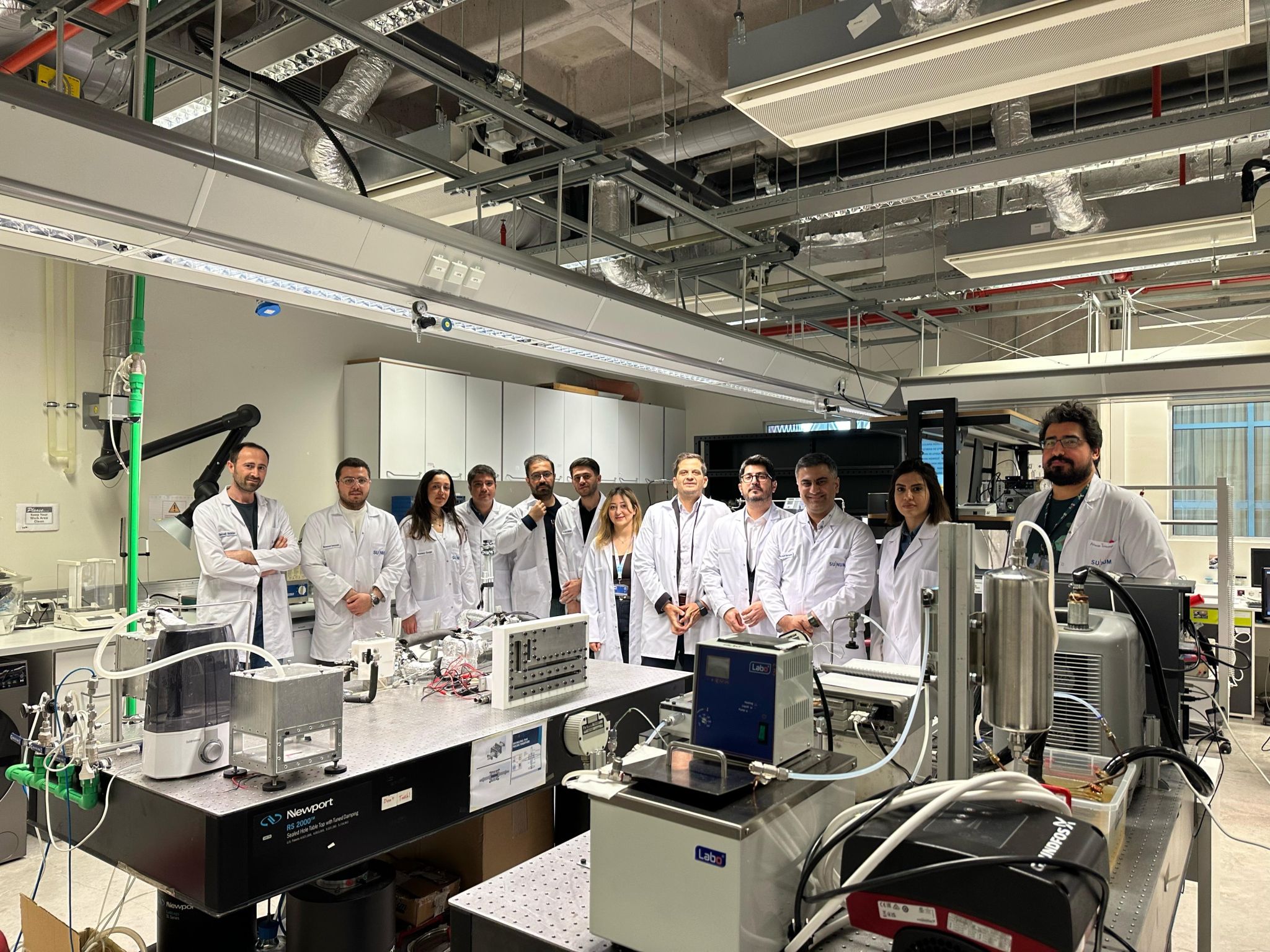
Dr. Koşar, in collaboration with Dr. Morteza Ghorbani, developed another noteworthy project, the AquaCav, for wastewater treatment using the power of cavitation bubbles. Conducted with Dr. Tzanakis as the co-principal investigator, the project, which involves removing microorganisms and chemicals from liquids, received approximately 5 million Turkish Lira in support from the UK. The project can also be used in apartment buildings and residential complexes in order to treat a significant amount of wastewater.
Dr. Koşar says, “This system is a cutting-edge technology because we are working to completely eliminate chemicals. Our goal is to ensure that pollutants in the water are removed and returned to nature cleanly.” Noting that the project is now available for use in apartment buildings and residential complexes, Dr. Koşar said, “Our cavitation application can be used in a single residential complex.”
AWARDS
He has received numerous national and international awards for his achievements, including the Turkish Academy of Sciences Outstanding Young Scientist Award, the Feyzi AKKAYA Scientific Activities Support Fund Eser Tümen Outstanding Achievement Award, the TÜBİTAK Incentive Award, the 9th Kadir Has Promising Scientist Award, the ASME (American Society of Mechanical Engineers) ICNMM (International Conference on Nanochannels, Microchannels, and Minichannels) Outstanding Early Career Award, the METU Prof. Dr. Mustafa N. PARLAR Education and Research Foundation Science Award, the Dr. Nejat Eczacıbaşı Foundation Medical Science Award, and the Micro Flow and Interfacial Phenomena (µFIP) Prominent Researcher Award.
ACADEMIC BACKGROUND
Ali Koşar received his bachelor's degree in Mechanical Engineering from Boğaziçi University in 2001. He continued his graduate studies at Rensselaer Polytechnic Institute in the Department of Mechanical Engineering from 2001 to 2006. He completed his master's and doctoral degrees in 2003 and 2006, respectively. He continued his postdoctoral studies at Rensselaer Polytechnic Institute from 2006 to 2007 and joined the Department of Mechatronic Engineering at Sabancı University in the fall of 2007.
Microfluidics and Microfluidic Chip Manufacturing
Every corner of the human body is microfluidics. Without the capillary blood vessels that carry nutrients, oxygen, and signaling molecules to every cell, we would not be born or function. Everything from pregnancy tests to glucose strips to inkjet printers and genetic tests relies on microfluidics.
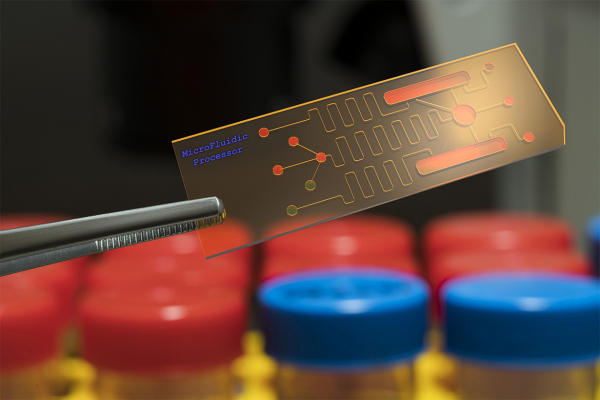
Any device that processes very small amounts of liquid is microfluidic. In this system, liquids flow through channels thinner than a strand of hair, and the flow can be turned on and off by tiny valves.
Microfluidic chip fabrication involves creating tiny, precise devices that can control the flow of liquids at a very small scale, typically in micron or nanometer-sized channels. These chips can perform highly complex tasks, such as chemical reactions, biological analyses, or liquid mixing, with minimal amounts of liquid.
Source: Mikroakışkan: Çevremizi Saran Minik, Güzel Teknoloji - Evren Atlası
Patents
A cystoscopy device and system with a hydrodynamic cavitation probe
Integrated circuit systems cooled by embedded microtubes
Heat exchange device and method
Flow system avoiding particle agglomeration
Heat exchanger with enhanced heat transfer surfaces
An energy harvesting device
An apparatus for using hydrodynamic cavitation in medical treatment
Pharmaceutical drug delivery system
https://fens.sabanciuniv.edu/tr/patent-listesi
Sources:
https://www.sciencedirect.com/science/article/pii/S2666202722000349
International Journal of Thermofluids: Self-assembled archaea bio-coatings in thermal-fluids systems: A study on adhesion optimization and energy efficiency


